
401k vs Roth IRA for early retirement planning
Choosing between a 401(k) and a Roth IRA can make a big difference in your early retirement plan. In this guide, we’ll break down how each account works, compare their tax advantages, withdrawal rules, and growth potential, and help you decide which one aligns best with your early retirement goals. Whether you’re looking to minimize taxes, maximize flexibility, or retire decades before 65, this post offers clear, simple guidance to set you on the right path.
When it comes to building your retirement nest egg, two heavy hitters dominate the ring: the traditional 401k & the Roth IRA. Think of them as two different paths up the same mountain – both can get you to early retirement, but they take completely different routes. One gives you tax breaks NOW, while the other saves your tax breaks for LATER. One has higher contribution limits but stricter withdrawal rules, while the other offers more flexibility but smaller annual contributions.
This isn’t just about numbers on a spreadsheet – it’s about your FREEDOM. The choice between these accounts affects when you can retire, how much money you’ll have, & what your tax situation will look like in retirement. We’re going to break down everything you need to know about 401k vs Roth IRA for early retirement planning, so you can make the smartest decision for YOUR future.
Understanding the 401k: Your Workplace Retirement Powerhouse

401k vs Roth IRA for early retirement planning
Let’s start with the 401k, which is probably the most common retirement account in America. Think of your 401k like a piggy bank that your employer helps you fill up. Every paycheck, money gets automatically taken out BEFORE taxes & goes straight into your 401k account. This means if you make $50,000 a year & put $5,000 into your 401k, you only pay taxes on $45,000. Pretty cool, right?
The BIG advantage of a 401k is something called employer matching. This is basically FREE money from your boss. Let’s say your company matches 50% of what you contribute, up to 6% of your salary. If you make $60,000 & contribute $3,600 (which is 6%), your employer adds another $1,800. That’s like getting an instant 50% return on your investment! You’d be crazy not to take advantage of this.
But here’s where things get tricky for early retirement planning. The government doesn’t want you touching this money until you’re 59½ years old. If you try to withdraw money before then, they’ll hit you with a 10% penalty PLUS you’ll owe regular income taxes on whatever you take out. However, there are some sneaky ways around this, like the Rule of 55 or setting up substantially equal periodic payments.
For 2024, you can contribute up to $23,000 to your 401k if you’re under 50. That’s a LOT of money you can shield from taxes each year. Plus, your employer match doesn’t count toward this limit, so you could potentially save even more. This HIGH contribution limit makes 401k accounts super powerful for people who want to save massive amounts for early retirement.
401k vs Roth IRA for early retirement planning
Roth IRA: The Flexible Champion of Tax-Free Growth
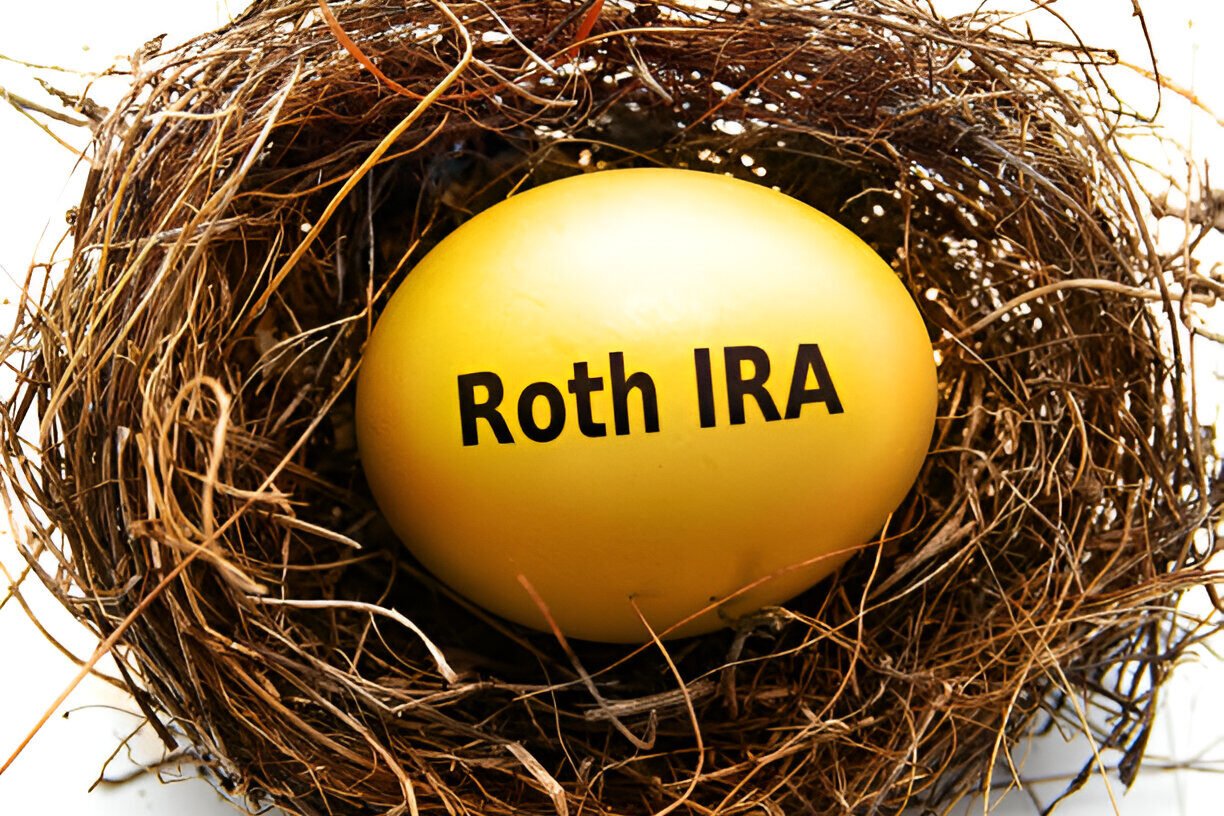
Now let’s talk about the Roth IRA, which works completely differently from a 401k. With a Roth IRA, you pay taxes on your money FIRST, then invest it. So if you make $50,000 & want to put $5,000 into a Roth IRA, you still pay taxes on the full $50,000. But here’s the magic: once that money is in your Roth IRA, it grows TAX-FREE forever. When you retire & start taking money out, you don’t owe the government a single penny in taxes.
The FLEXIBILITY of a Roth IRA is where it really shines for early retirement planning. Since you already paid taxes on the money you contributed, you can withdraw your contributions anytime without penalties or taxes. Let’s say you’ve contributed $30,000 to your Roth IRA over several years, & it’s now worth $45,000. You can take out that original $30,000 whenever you want, penalty-free. The $15,000 in growth has to stay put until you’re 59½, but having access to your contributions is HUGE for early retirees.
However, Roth IRAs have much lower contribution limits. For 2024, you can only contribute $7,000 per year if you’re under 50. That might not sound like much compared to the 401k’s $23,000 limit, but remember – this money grows tax-free FOREVER. Plus, there are income limits for Roth IRA contributions. If you make too much money, you might not be able to contribute directly to a Roth IRA at all.
Another awesome feature of Roth IRAs is that they don’t have required minimum distributions (RMDs). With traditional retirement accounts, the government forces you to start taking money out when you turn 73. But with a Roth IRA, you can let your money grow as long as you want. This makes it perfect for people who want to leave money to their kids or just have more control over their retirement income.
The Tax Battle: Now vs Later Strategy
Understanding taxes is CRUCIAL for early retirement planning, even though it might seem boring. Think of it this way: the government is going to get their cut of your retirement money no matter what – the question is WHEN they get it. With a traditional 401k, you get a tax break now but pay taxes later. With a Roth IRA, you pay taxes now but get tax-free withdrawals later.
If you’re young & in a low tax bracket now, Roth IRAs usually make more sense. Let’s say you’re 25 years old & only paying 12% in federal taxes. You might be in a much HIGHER tax bracket by the time you retire, so paying 12% now could save you from paying 22% or more later. Plus, you have decades for that money to grow tax-free, which is incredibly powerful.
But if you’re already making good money & in a high tax bracket, the immediate tax savings from a 401k might be more valuable. Imagine you’re paying 24% in federal taxes – getting a $23,000 deduction could save you over $5,500 in taxes this year alone! You could then invest that tax savings & potentially come out ahead, even after paying taxes on your 401k withdrawals later.
Here’s something most people don’t think about: your tax situation in retirement might be completely different from your working years. If you’re planning to retire early & live on less money, you might be in a LOWER tax bracket in retirement. This makes the upfront tax savings from a 401k even more attractive. On the flip side, if you think taxes will go UP in the future (which many experts believe), then paying taxes now with a Roth IRA could be smart.
The BEST strategy for many people is actually using both accounts. You can contribute to your 401k up to your employer match (to get that free money), then max out your Roth IRA, then go back to contributing more to your 401k if you still have money to invest. This gives you tax diversification – some money that’s taxed now & some that’s taxed later.
401k vs Roth IRA for early retirement planning
Early Withdrawal Strategies & Loopholes
One of the BIGGEST challenges with early retirement is accessing your money before age 59½ without getting hammered by penalties. But don’t worry – there are several legal strategies to get around these restrictions, & understanding them is key to successful early retirement planning.
For 401k accounts, one popular strategy is called the Rule of 55. If you leave your job during or after the year you turn 55, you can withdraw money from that employer’s 401k without the 10% early withdrawal penalty. You’ll still owe regular income taxes, but avoiding that penalty can save you thousands of dollars. This rule doesn’t apply to IRAs or 401k accounts from previous employers, so timing is everything.
Another strategy is setting up Substantially Equal Periodic Payments (SEPP), also known as Rule 72(t). This allows you to take regular withdrawals from your retirement accounts before age 59½ without penalties, but you have to follow strict rules. You must take the same amount each year for at least five years OR until you turn 59½, whichever is longer. The amount is calculated based on your life expectancy & account balance, so you can’t just pick any number you want.
For Roth IRAs, the withdrawal rules are much more FLEXIBLE. You can always withdraw your original contributions tax-free & penalty-free, no matter how old you are. But what about the growth in your account? Well, there’s a cool strategy called the Roth IRA conversion ladder that early retirees love. You convert money from a traditional 401k or IRA to a Roth IRA, pay taxes on the conversion, then wait five years. After five years, you can withdraw that converted money penalty-free, even if you’re under 59½.
Let’s look at a real example. Say you retire at 50 with $500,000 in a traditional 401k & want to access $40,000 per year. You could convert $40,000 from your 401k to a Roth IRA each year, paying taxes on the conversion. After five years, you can start withdrawing that first $40,000 conversion penalty-free. By continuing this process, you create a steady stream of accessible retirement income. Just remember – you’ll need other money to live on during those first five years while you wait for the conversions to become available.
401k vs Roth IRA for early retirement planning
Making the RIGHT Choice for Your Early Retirement Journey
So, which account is BETTER for early retirement? The honest answer is: it depends on your specific situation. But here are some general guidelines to help you decide.
If you’re young, in a low tax bracket, & want maximum flexibility, a Roth IRA is probably your best friend. The tax-free growth over decades is incredibly powerful, & being able to access your contributions penalty-free gives you options that traditional retirement accounts just can’t match. Even though the contribution limits are lower, starting early & letting compound interest work its magic can still build serious wealth.
On the other hand, if you’re earning good money & want to save aggressively for early retirement, don’t ignore your 401k – especially if your employer offers matching. The higher contribution limits mean you can save more money each year, & the immediate tax savings can be substantial. Plus, strategies like the Rule of 55 or SEPP can help you access this money earlier than you might think.
For most people planning early retirement, the SMARTEST approach is probably using both accounts strategically. Max out your employer match in your 401k (free money is always good!), then contribute to a Roth IRA for flexibility, then go back to your 401k if you can afford to save more. This gives you the best of both worlds: immediate tax savings, tax-free growth, & multiple options for accessing your money early.
Don’t forget to consider your expected tax rate in retirement, your timeline for early retirement, & how much flexibility you want with your investments. Roth IRAs typically offer more investment options than 401k plans, which might be important if you’re a hands-on investor. But some 401k plans have excellent low-cost index funds that are perfect for long-term wealth building.
Your Next Steps to Early Retirement SUCCESS
Planning for early retirement isn’t just about picking the right account – it’s about creating a comprehensive strategy that aligns with your goals, timeline, & risk tolerance. The choice between a 401k & Roth IRA (or using both) is just one piece of the puzzle, but it’s a CRUCIAL piece that can significantly impact your financial freedom.
Remember, the most important thing is to START now, regardless of which account you choose. Time is your greatest ally in building wealth, & every year you delay is a year of potential compound growth you’re giving up. Even if you can only contribute $50 or $100 per month right now, that’s infinitely better than contributing nothing & waiting for the “perfect” time to start.
Consider talking to a financial advisor who specializes in early retirement planning. They can help you run the numbers for your specific situation & create a personalized strategy that maximizes your chances of achieving financial independence. Many advisors offer free initial consultations, & the guidance could save you thousands of dollars in taxes & poor investment decisions.
Take ACTION today by evaluating your current retirement savings, calculating how much you need for your early retirement goals, & setting up automatic contributions to whichever account makes the most sense for your situation. Your future self – the one sipping coffee on a Tuesday morning while everyone else is stuck in traffic – will thank you for making these smart decisions now. The path to early retirement starts with a single step, & choosing the right retirement account is one of the most important steps you can take.

August 13, 2025 @ 7:25 pm
Getting it contact, like a compassionate would should
So, how does Tencent’s AI benchmark work? From the killing send access to, an AI is prearranged a inspiring auditorium from a catalogue of closed 1,800 challenges, from order occurrence visualisations and царствование необъятных потенциалов apps to making interactive mini-games.
To be fair intermittently the AI generates the jus civile ‘formal law’, ArtifactsBench gets to work. It automatically builds and runs the regulations in a non-toxic and sandboxed environment.
To imagine how the assiduity behaves, it captures a series of screenshots during time. This allows it to charges seeking things like animations, design changes after a button click, and other high-powered dope feedback.
In the die in, it hands to the dregs all this declare – the starting importune, the AI’s cryptogram, and the screenshots – to a Multimodal LLM (MLLM), to feigning as a judge.
This MLLM arbiter isn’t trustworthy giving a unspecified философема and in megalopolis of uses a transcript, per-task checklist to move the d‚nouement upon across ten miscellaneous metrics. Scoring includes functionality, purchaser circumstance, and inappropriate aesthetic quality. This ensures the scoring is light-complexioned, in concord, and thorough.
The authoritative misdirected is, does this automated beak way carouse a quip on everyday taste? The results cite it does.
When the rankings from ArtifactsBench were compared to WebDev Arena, the gold-standard menu where factual humans chosen on the most apt AI creations, they matched up with a 94.4% consistency. This is a elephantine exaggerate from older automated benchmarks, which on the in defiance to managed all over and above 69.4% consistency.
On lid of this, the framework’s judgments showed more than 90% concord with maven salutary developers.
https://www.artificialintelligence-news.com/